

SailPoint, MongoDB, and Lyft's filings show exactly how these multi-year, non-cancelable agreements work and grow over time.
Here is what we can learn from these public companies about these binding commitments:
SailPoint: Growing Commitment Nature
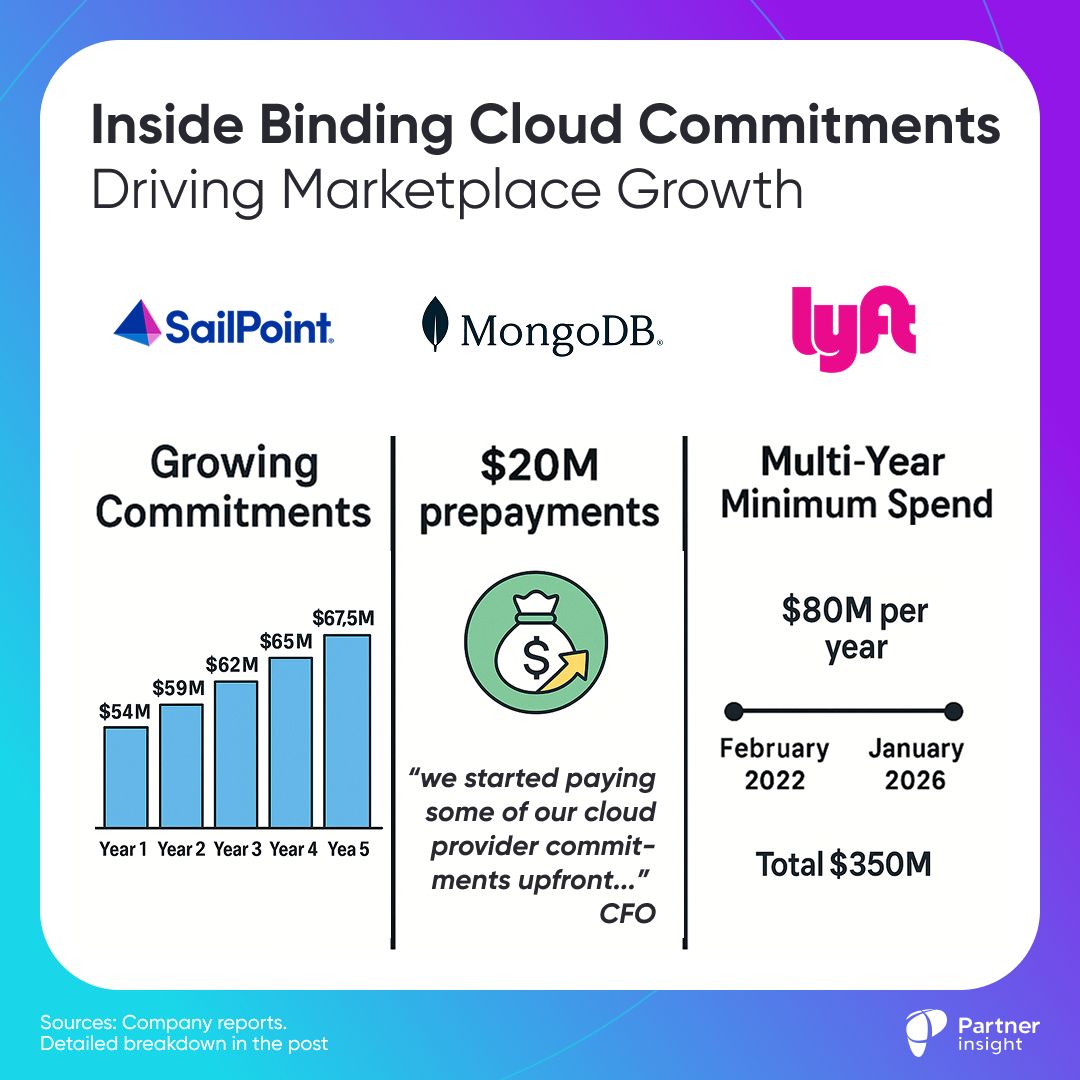
SailPoint shared that they have a 5-year cloud contract that's "enforceable and legally binding" with annual spending that increase each year:
Year 1: $54M
Year 2: $59M
Year 3: $62M
Year 4: $65M
Year 5: $67.5M
Total commitment: $307.5M.
Their filing explicitly states that "if we do not meet the minimum purchase obligation during any of those years, we are required to pay the difference."
MongoDB: Strategic Approach
MongoDB took an unusual step that shows how seriously companies view these commitments. Michael Gordon (CFO & COO) told investors last August:
"In Q2, we started paying some of our cloud provider commitments upfront in exchange for better economics. We see this as a very low risk, high ROI use of our cash and one that will benefit our gross margin going forward."
The trade-off? "These prepayments will represent a negative impact to our operating cash flow in the back half of the year of roughly $20 million per quarter."
When a CFO is willing to take a $20M quarterly hit to cash flow, it demonstrates the binding nature of these commitments.
Lyft's Multi-year Minimum Spend
Lyft disclosed that they committed to spend with Amazon Web Services (AWS) ”an aggregate of at least $350 million between February 2022 and January 2026."
They must spend a "minimum amount of $80 million in each of the four years."
The consequence of missing targets? They warn that failure to meet minimums "may require us to pay the difference, which could adversely affect our financial condition and results of operations."
These examples aren't just relevant for enterprise giants.
Smaller companies sign similar commitments, just at appropriate scales. The structure remains consistent: binding contracts with minimum spend requirements and penalties for shortfalls.
For Cloud GTM and alliance leaders, these commitments create marketplace opportunities:
When companies have already allocated the cloud budget they must spend, they become motivated buyers on cloud marketplaces (where they can spend some of them).
Unlike discretionary spending that can be cut, these contracts represent protected budgets that must be utilized - creating stable opportunities for marketplace sellers
Commits tend to increase over time, as shown by SailPoint's YoY growth, as companies expect their cloud usage to expand, especially with using AI.
Are you helping your customers leverage their commits, or are you still think they are “not real”?

Latest Insights & Analysis
We help our clients to define customer-centric strategies that stimulate innovation and create value