

Marketplace is one of the few GTM levers that can materially change outcomes — bigger deals, faster closes and less procurement friction. Yet many field sellers are slow to adopt them.
Recently we discussed how to drive Marketplace adoption & revenue in a webinar with AWS + ISV leaders.
Here are 5 incentives they see working:
1️⃣ Start with comp neutrality
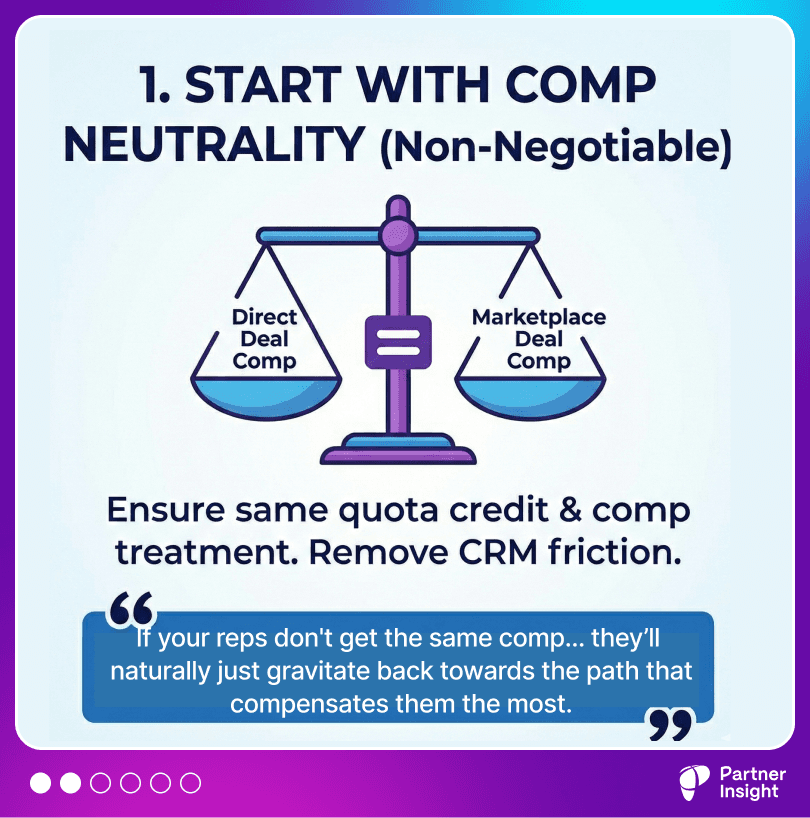
Juston Salcido (then Sr. Partner Development Specialist at AWS) put it plainly:
“If your reps don’t get the same comp for deals that go through Marketplace that go direct, they’re gonna naturally just gravitate back towards the path that compensates them the most.”
Translation: Marketplaces need the same comp treatment + integrated into the sales process/CRM, not bolted on at the end.
2️⃣ Run a temporary comp-positive SPIF (to drive behavior change)
Comp neutrality removes the penalty. SPIFs create momentum.
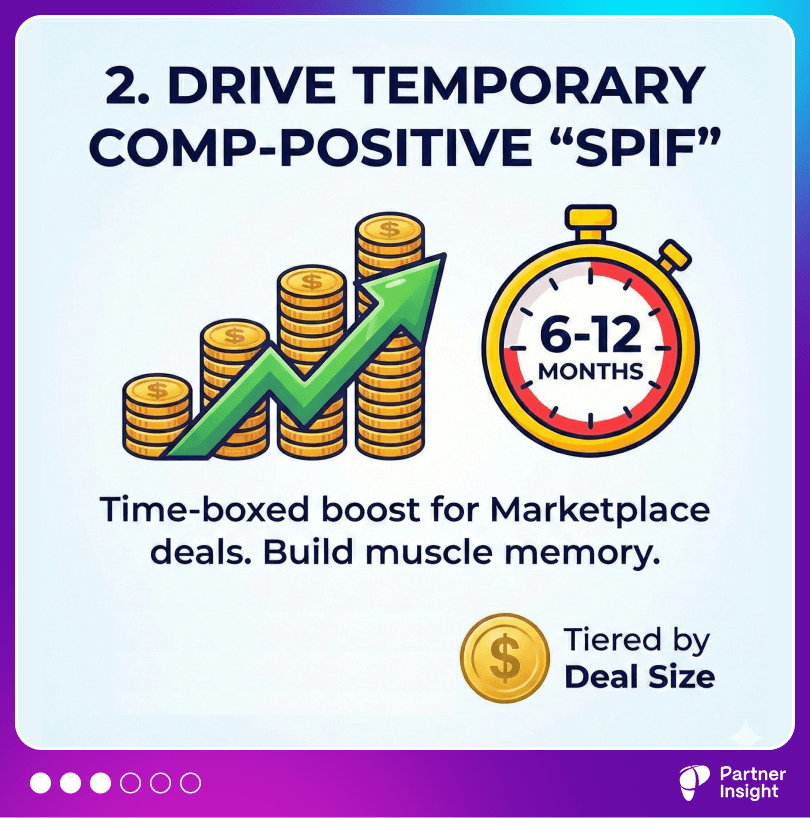
In practice: time-box it (6–12 months), trigger when deals are transacted via Marketplace, and tier it by deal size so you’re not overpaying on small deals.
Kyle Heisner (Head of GTM & Alliances, Suger) shared what happens when a company removed it too early:
“He dropped his SPIF program… and he saw a 40% drop in the next quarter… [and] immediately went back and implemented it.”
3️⃣ Add recognition + competition
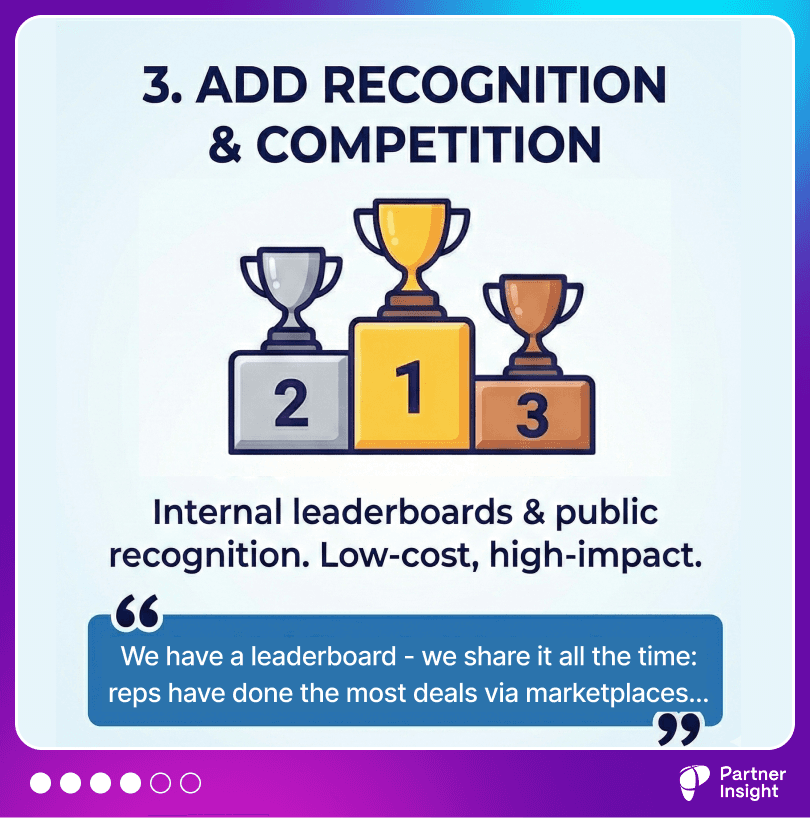
Prashant Pai (EVP, Strategic Alliances, KnowBe4) explained how they reinforce behavior at scale:
“We have an internal leaderboard… and we share that all the time on our revenue cadence calls. These reps have done the most deals through marketplaces, these reps have done the largest deals… We do that for our direct sellers, for our renewal folks, and for our channel folks as well.”
This works because sellers are competitive — and it makes Marketplace visible inside the revenue org.
4️⃣ Pay sellers to become internal evangelists
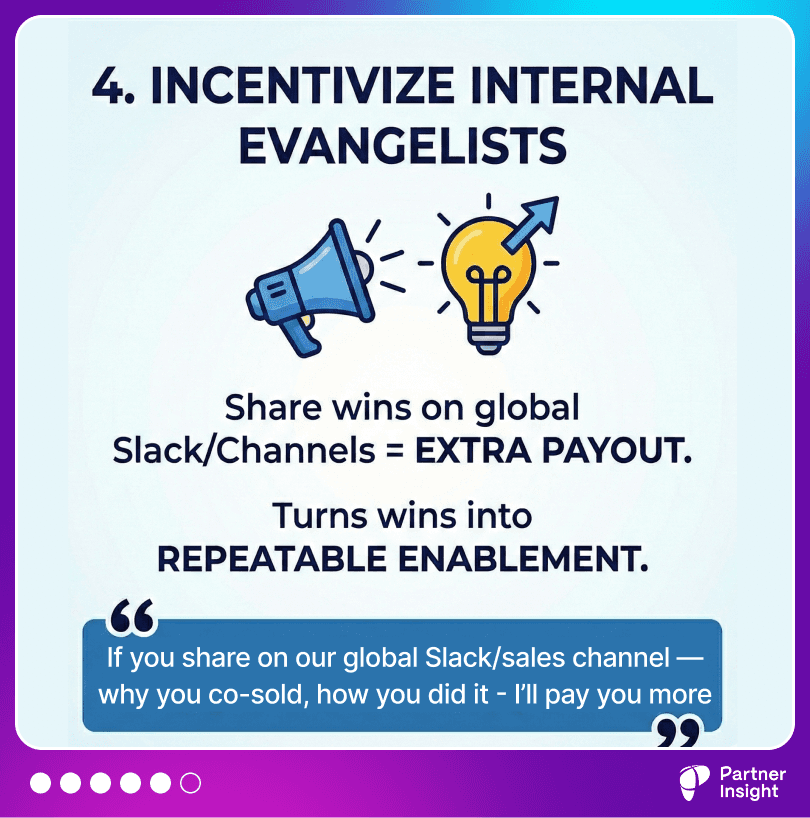
Mike Marzano (Global Head of Cloud Alliances, Contentsquare) described my favorite “second-order” incentive he implemented for his field:
“By going through the marketplace, you’ll get a SPIF. But if you go and put a story out on our global sales channel about why you co-sold, how you did it… what went well… what you’d do better… and you share that out… I’ll pay you more.”
That’s how you turn one win into a shared playbook.
5️⃣ Make Marketplace measurable
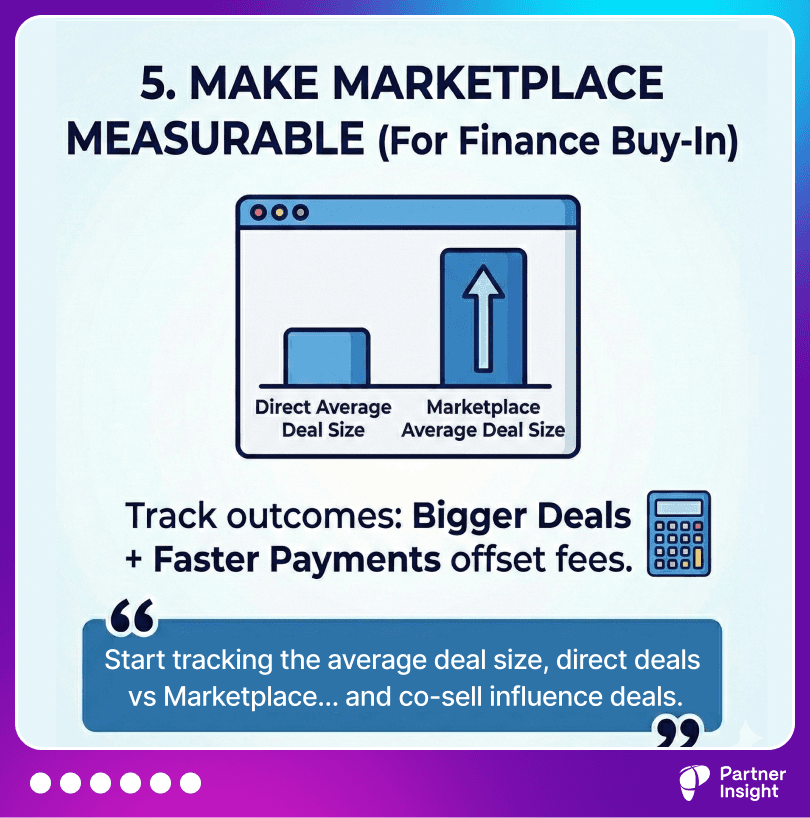
Juston’s conclusion was simple:
“You really gotta start tracking… the average deal size for direct deals, the average deal size for deals that go through Marketplace and have a co-sell influence.”
This helps sellers see faster cycles / bigger deals, Finance (and the rest) to see time-to-cash, and why Marketplace fees are worth it.
If you don’t measure it, the program becomes opinion — and may get cut when priorities shift.

Latest Insights & Analysis
We help our clients to define customer-centric strategies that stimulate innovation and create value